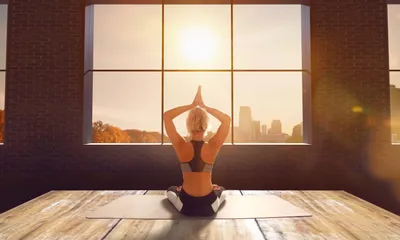
There is a thread that runs through every genuine meditative tradition — a quality of profound inner stillness that coexists with wide-awake awareness. Ancient yogis called it turiya, the fourth state beyond waking, dreaming, and deep sleep. Zen teachers point to it as mushin, the mind without obstruction. What these traditions mapped through centuries of inner exploration, modern neuroscience is beginning to chart with remarkable precision — and at the center of both maps runs a single nerve.
The vagus nerve is arguably the most important nerve in the human body that most people have never heard of. Understanding it — and learning to consciously work with it — may be the most practical gateway to the higher states that seekers have pursued for millennia.
What Is the Vagus Nerve?
The word vagus comes from Latin, meaning “wandering,” and the name is fitting. This is the tenth cranial nerve, the longest in the body, and it wanders from the brainstem all the way down through the neck, chest, and abdomen, touching nearly every major organ along the way — the heart, lungs, liver, stomach, and intestines. It is the superhighway of the parasympathetic nervous system, the branch that governs rest, recovery, digestion, and — as we are increasingly learning — the conditions necessary for deeper awareness.
The vagus nerve carries information in both directions. About 80% of its fibers are afferent, meaning they carry signals upward from the body to the brain. This is a crucial fact: your body is not merely receiving orders from above. It is constantly reporting its state upward, shaping your mental and emotional experience in real time. When your gut feels uneasy before a difficult conversation, when your chest tightens under threat, when something deep in you relaxes after laughter — that is the vagus nerve doing its job.
Vagal Tone: The Hidden Measure of Your Inner Life
Vagal tone refers to the baseline level of activity in the vagus nerve — essentially, how robustly your parasympathetic system is engaged. It is most commonly measured through a metric called heart rate variability (HRV): the subtle beat-to-beat variation in your heart rate that reflects the dynamic conversation between your sympathetic and parasympathetic nervous systems. A high HRV indicates high vagal tone, and high vagal tone correlates with a remarkable range of benefits: better emotional regulation, reduced inflammation, faster recovery from stress, stronger immune function, and greater cognitive flexibility.
But vagal tone is not merely a health metric. It is a map of your capacity for consciousness.
Research published in Neuroscience & Biobehavioral Reviews in 2025 found that advanced meditators — defined not just by years of practice but by access to deeper phenomenological states — show distinct autonomic nervous system profiles compared to ordinary long-term practitioners. The deeper the meditative development, the more sophisticated the relationship between the sympathetic and parasympathetic systems, moving toward what researchers describe as “relaxed alertness”: simultaneous activation of arousal and calm. This is precisely the state that contemplative traditions have always pointed toward — fully awake, yet profoundly at rest.
High vagal tone appears to be both a prerequisite for and a product of deep meditation. It creates the physiological conditions — inner safety, reduced threat response, open awareness — in which consciousness can expand beyond its ordinary contracted state.
The Science of Stillness
A landmark model published in Frontiers in Human Neuroscience proposes what researchers call “respiratory vagal nerve stimulation” (rVNS) as the unifying mechanism behind the benefits of virtually all contemplative practices. Whether you are practicing Zen breathing, pranayama, Taoist qigong, or Sufi dhikr, the common denominator is a disciplined relationship with breath — specifically, slow breathing rates and extended exhalations. Each of these breath patterns directly stimulates the vagus nerve, shifting the autonomic balance from sympathetic dominance (fight-or-flight) toward parasympathetic richness.
A 2024 study in Applied Psychophysiology and Biofeedback examined Heart Rhythm Meditation — a practice that combines deep, rhythmic breathing with sustained attention on the heart — and found measurable increases in vagal tone alongside significant improvements in well-being over a ten-week period. The researchers note that engaging the abdominal muscles in full, slow breathing likely stimulates the vagus nerve with greater intensity than standard mindfulness breathing.
The implications are profound. What mystics discovered through direct experience — that the breath is the royal road to altered states — turns out to have a clear physiological substrate. The vagus nerve is, quite literally, the biological mechanism through which conscious breathing transforms consciousness.
The Polyvagal Lens: Safety as a Portal
Psychiatrist Stephen Porges developed Polyvagal Theory, which offers a more nuanced map of the vagal system. According to this framework, we operate primarily from one of three physiological states:
- Ventral vagal — the state of social engagement, safety, and open presence. This is where deep meditation becomes possible.
- Sympathetic mobilization — fight-or-flight, activated when threat is perceived.
- Dorsal vagal shutdown — a primitive freeze or collapse response in the face of overwhelming threat.
Most of us, shaped by chronic stress, spend far too much time oscillating between sympathetic activation and dorsal collapse. Genuine meditation requires the ventral vagal state — a felt sense of safety in the body, not merely a cognitive belief that things are okay. This is why techniques that directly stimulate the vagus nerve are not merely relaxation tools. They are methods for establishing the physiological ground from which consciousness can open.
Practical Techniques for Vagal Stimulation
The body is not a machine that you observe from a distance — it is the instrument through which awareness moves. Working consciously with the vagus nerve is, in essence, learning to tune that instrument. Here are the most evidence-supported and experience-tested methods:
1. Humming, Chanting, and Toning
The vagus nerve runs through the larynx, and vocalization directly activates it. This is why every major spiritual tradition has independently discovered the power of sacred sound — mantras, chanting, hymns, toning. The vibration is not merely symbolic; it is physiologically effective.
Practice: Bhramari pranayama (humming bee breath)
- Sit comfortably with an upright spine.
- Close your eyes and relax your jaw slightly.
- Inhale slowly and fully through the nose.
- On the exhale, make a steady humming sound, like the letter “M” or the sound of a bee. Feel the vibration in your skull, throat, and chest.
- Continue for 5–10 minutes.
Research on extended vocalization consistently shows reductions in heart rate, blood pressure, and cortisol — all markers of increased vagal activity. Chanting “OM” has the same mechanism: the extended “M” sound creates sustained vibration through the vagal pathway. Even the “VU” sound used in certain somatic therapies has been shown to stimulate the vagus and increase parasympathetic activation.
For meditators on this path, try combining Bhramari with a simple visualization of the sound as a current moving upward through the spine — linking the vagal stimulation to the subtler energetic map of the body.
2. Cold Exposure
Cold water activates the vagus nerve through two main pathways: the diving reflex (which dramatically slows heart rate when cold water contacts the face) and thermoreceptors throughout the skin that send parasympathetic signals upward. This is why the shock of cold is followed, for those who lean into it rather than resist it, by a wave of calm clarity.
Practice: Progressive cold exposure
- Begin with contrast showers — alternating 1–2 minutes of warm with 30 seconds of cold, for 3–5 cycles.
- End always with cold, allowing the parasympathetic rebound to complete.
- As tolerance develops, extend the cold exposure. The critical skill is relaxing into the cold rather than tensing against it — surrender, not endurance.
- For those drawn to deeper practice: cold plunges at 10–15°C (50–59°F) for 2–5 minutes generate significant vagal activation and the release of norepinephrine, which sharpens attention in the aftermath.
The spiritual dimension of cold exposure is not incidental. Many indigenous and shamanic traditions used cold as a tool for psychological dissolution — the boundary between self and world thins when the body is held in the present moment without escape. The vagal activation that follows creates ideal conditions for meditation. If you want to explore this connection more deeply, the article on The Alchemy of Cold: Ice Baths, Wim Hof, and Ancient Hermetic Practices on this site goes much further into this territory.
3. Specific Yoga Poses
The vagus nerve’s journey through the thoracic cavity, around the heart, and deep into the abdomen means that certain body positions directly compress, stretch, or otherwise stimulate it. Yoga discovered this empirically over thousands of years; physiology is now explaining why.
The most effective poses for vagal stimulation:
Supported fish pose (Matsyasana variation):
- Place a folded blanket or bolster lengthwise under your spine.
- Lie back over it so that your chest opens and your heart lifts.
- Allow the arms to fall open, palms up.
- Stay for 5–10 minutes with slow, full breathing. This pose stretches the anterior neck where the vagus nerve passes, opens the chest, and triggers the relaxation reflex through deep diaphragmatic breathing.
Legs up the wall (Viparita Karani):
- Sit sideways against a wall, then swing your legs up as you lie back.
- Allow the hips to be supported by the floor or a folded blanket.
- Stay for 5–15 minutes. The inversion slightly increases blood pressure in the upper body, which baroreceptors in the carotid sinus detect and signal the vagus to compensate with parasympathetic activation — a reliable and gentle vagal trigger.
Child’s pose (Balasana) with extended exhalation:
- From kneeling, fold forward until your forehead touches the floor and your belly rests on or between your thighs.
- Use a 4-count inhale and 8-count exhale.
- Stay for 5 minutes. The gentle compression of the abdomen against the thighs massages the vagus nerve’s branches in the gut, while the extended exhale provides direct respiratory vagal stimulation.
The article on The Spine as Axis Mundi: Kundalini, Alchemy, and Spinal Health offers a complementary perspective on how spinal work connects to the body’s deeper energetic architecture.
4. Extended Exhalation Breathing
This is perhaps the most direct and evidence-saturated technique available. Research across dozens of studies confirms that breathing at approximately six breath cycles per minute — roughly a 5-second inhale and a 5-second exhale — produces the greatest measurable increase in vagal tone and HRV. Extending the exhale further, to a 4:8 ratio, amplifies the effect.
Basic coherence breathing practice:
- Inhale for 5 counts.
- Exhale for 5 counts.
- Repeat for a minimum of 5 minutes, ideally 20 minutes.
This pace, sometimes called resonance frequency breathing, creates a beautiful synchronization between the breath and the natural oscillation of the cardiovascular system — a state of physiological coherence in which the entire body begins to move in rhythm.
For practitioners drawn to the intersection of breathwork and consciousness, this technique can be used as the anchor for a deep meditation: establish coherence breathing first, allow the vagal tone to rise, and then release the breath control and simply abide in the spacious awareness that results.
Integrating the Practice
The vagus nerve is not a button to push for a quick calm. It is more like a garden: the more consistently you tend it, the richer the inner ecology becomes. Individual sessions produce immediate effects — calmer heart rate, reduced cortisol, a widening of perceptual space. But longitudinal research is clear that sustained practice over weeks and months produces lasting changes in baseline vagal tone, emotional regulation, and the depth of meditative states accessible to you.
A practical daily rhythm might look like this: begin the morning with 5 minutes of coherence breathing and Bhramari before meditation, end the morning practice with Viparita Karani or Supported Fish, and close the day with a cold shower and a few minutes of humming in the shower. These are not additions to a spiritual practice — they are the physiological preparation for one.
The ancient traditions did not separate body from soul, physiology from consciousness. The idea that spiritual development happens despite the body, rather than through it, is a relatively modern error. The vagus nerve reminds us, with empirical precision, what the sages always knew: the body is not an obstacle on the path. It is the path.
The wandering nerve wanders through everything that matters. Learn to listen to it — and through it, learn to listen to the vast quiet that precedes thought.
External references:
- Respiratory Vagal Nerve Stimulation model (PMC) — the science behind breath and contemplative practices
- Heart Rhythm Meditation study (Springer, 2024) — the 10-week HRV/meditation study
- Advanced meditation and the ANS review (ScienceDirect, 2025) — the “relaxed alertness” research
Going further: Breathing to Manage Bodily State based on Polyvagal Theory on Udemy trains the breath side of vagal tone — the lever this article argues is the most available one. Affiliate link — Born To Be Free earns a commission if you enrol, at no extra cost to you.