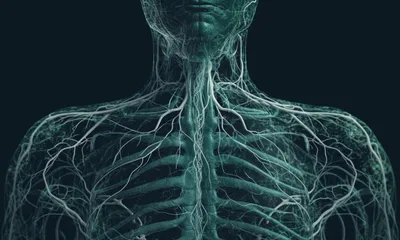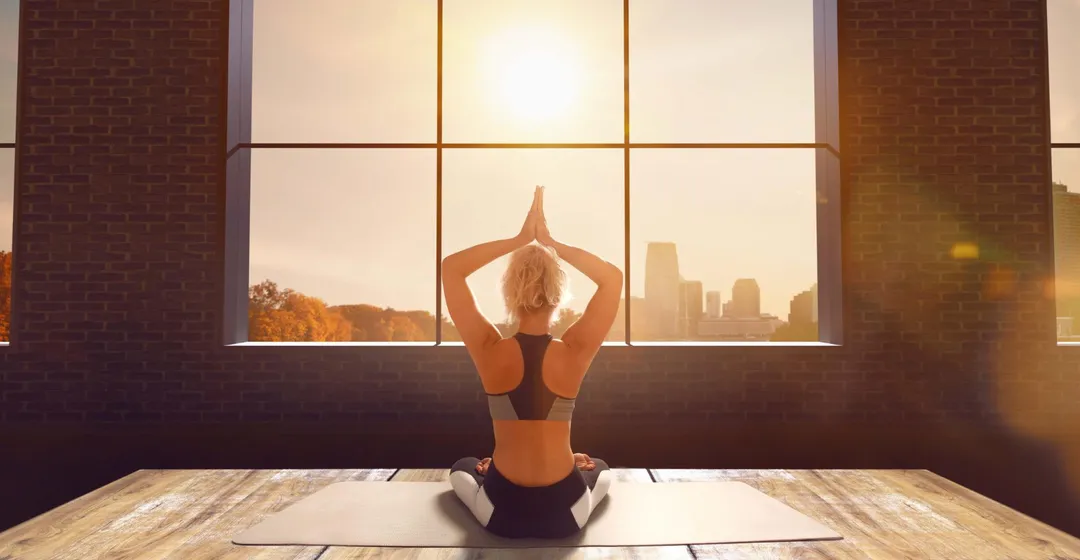
There is a clock inside you that predates language, civilization, and even multicellular life. It does not tick mechanically. It breathes — expanding and contracting with the light, with the temperature, with the invisible pull of the Earth’s rotation. Every cell in your body carries this ancient timekeeper. And for most of human history, we listened to it.
We no longer do.
The modern world has staged a quiet coup against biological time. Artificial light floods our evenings. Screens push cortisol into our bloodstreams at midnight. We eat when we are bored, sleep when we collapse, and exercise whenever the gym is open. The result is not merely fatigue. It is a kind of temporal homelessness — a state of being chronically out of phase with the rhythms that govern everything from hormone secretion to cellular repair, from creative insight to spiritual receptivity.
Chronobiology — the science of biological time — has spent the last several decades confirming what ancient traditions encoded in their daily rituals for millennia. The Ayurvedic concept of dinacharya (daily routine aligned with nature’s cycles), the Islamic five-times-of-prayer structure, the Taoist notion of wei wu wei (effortless action in accord with natural timing), the Celtic reverence for threshold times — all of these point toward the same understanding: time is not neutral. Certain hours open specific gates in the body, the mind, and the spirit.
This is the practice of circadian alchemy — the art of transmuting ordinary time into extraordinary living by aligning your actions with the natural rhythms woven into your biology.
What Chronobiology Actually Tells Us
The central mechanism is the suprachiasmatic nucleus (SCN) — a tiny cluster of roughly 20,000 neurons in the hypothalamus that acts as the master clock of the body. It synchronises itself primarily with light, receiving direct input from photoreceptive retinal cells that are entirely separate from those used for vision. This is why light is so powerful. It does not merely let you see — it literally sets your internal clock.
But the SCN is only the conductor. Every organ, every tissue, every cell carries its own peripheral clock — and these clocks need to be synchronised not just with light, but with eating, temperature, exercise, and social cues. When they fall out of phase with each other (a condition called circadian misalignment), the downstream effects are profound: impaired immune function, dysregulated metabolism, cognitive fog, mood disturbances, and reduced capacity for deep meditative states.
The Nobel Prize in Physiology or Medicine was awarded in 2017 specifically for the discovery of the molecular mechanisms controlling circadian rhythms — a sign that mainstream science has fully arrived at what traditional wisdom always knew.
The Sacred Hours: A Map of the Day
Dawn (Approximately 4:00–6:00 AM) — The Hour of Vata and the Brahma Muhurta
In Ayurveda, the period roughly 1.5 hours before sunrise is called the Brahma Muhurta — literally, “the hour of Brahma,” the creative force of the universe. This is considered the single most auspicious time for meditation, prayer, and spiritual practice.
Modern chronobiology offers a striking parallel. In the hours just before dawn, melatonin levels begin to decline while cortisol starts its natural morning rise — a process called the cortisol awakening response (CAR). The brain is in a prolonged hypnagogic state: not fully asleep, not fully awake. Theta brainwaves predominate. The prefrontal cortex is not yet running its usual editorial filter on consciousness. This creates a unique window in which the boundary between the inner world and waking awareness is at its thinnest.
Tibetan dream yoga practitioners have long known this. Many traditions of lucid dreaming and sleep-wake transition work — like those explored in the practice of dream yoga — specifically target this pre-dawn state as the most fertile ground for expanded awareness.
Practical guidance:
- Set an intention to wake naturally or with minimal disruption 90 minutes before sunrise.
- Avoid bright artificial light immediately upon waking — this prematurely quenches melatonin and collapses the hypnagogic window.
- Sit in stillness. Breath-focused or mantra meditation during this window tends to drop into depth unusually quickly.
- If you practise pranayama, this is the optimal time — lung capacity and airway resistance follow circadian patterns that favour deep breathing in the morning.
Sunrise to Mid-Morning (6:00–10:00 AM) — The Hour of Kapha and Embodied Presence
After sunrise, the body moves into what Ayurveda calls Kapha time — a period of earthy, stable, somewhat heavy energy. The natural inclination is toward groundedness rather than fire. This is, paradoxically, an excellent time for physical movement — not high-intensity output, but practice that builds structural integration: yoga, tai chi, qigong, walking meditation.
From a chronobiological standpoint, body temperature begins rising, muscle fibre activation improves, and the body is moving into optimal anabolic conditions. Research on the vagus nerve confirms that morning movement — particularly slow, conscious, breath-synchronised movement — activates the parasympathetic branch of the autonomic nervous system, setting a regulatory tone for the entire day.
This is also the ideal time for creative journaling and open-ended thinking. The default mode network (DMN) — the brain’s system for self-referential thought, imagination, and narrative construction — tends to be most accessible shortly after waking. Writers, artists, and visionaries have long reported that their most generative insights arrive in the first hours of the day.
Late Morning to Midday (10:00 AM–12:00 PM) — Peak Cognitive Fire
This is the window that chronobiology identifies as the peak of executive function for most people with a conventional sleep schedule. Core body temperature is rising toward its daily apex. Alertness hormones including cortisol and serotonin are well-elevated. Reaction time, logical reasoning, and focused attention reach their daily highs.
In Ayurveda, this transitions into Pitta time — the fire of transformation and sharp discernment. Ancient Hindu traditions scheduled the most intellectually demanding study (svadhyaya) in this window. Medieval monastic traditions similarly reserved the hours of Terce and Sext for study and intellectual labour.
This is not the time for meditation. The mind is too sharp, too active. This is the time for solving problems, making decisions, writing, analysing — whatever requires the full capacity of the analytical mind. Reserve the fire for fire-work.
Afternoon (2:00–5:00 PM) — The Paradox of the Dip and the Rise
Most people are familiar with the post-lunch slump around 2–3 PM. Chronobiology confirms this is a genuine feature of the circadian architecture — not merely the result of eating. Many traditional cultures institutionalised it: the Mediterranean siesta, the post-lunch rest in Ayurvedic routine, the Chinese concept of wu shui (midday sleep).
However, by 3–5 PM, something interesting happens. Body temperature, muscle strength, cardiovascular efficiency, and reaction time reach a second, often underappreciated peak. Research consistently shows that late-afternoon exercise produces superior results — greater strength output, better endurance, reduced injury risk, and faster recovery. This is when the body is biomechanically prepared for its highest physical output.
In the Hermetic tradition — whose principles underlie much of the alchemical framing of this site — this oscillating pattern of descent and re-ascent echoes the principle of rhythm: “The pendulum-swing manifests in everything.” The afternoon dip is not failure; it is the necessary trough before the evening tide.
Sunset and Evening (6:00–9:00 PM) — Integration and the Pitta-Vata Transition
As the sun sets, the body prepares for its inner work. Melatonin synthesis begins to ramp up in the pineal gland — notably, the gland that Descartes called “the seat of the soul,” and which traditions from Vedic to Egyptian associated with the third eye. The metabolic rate begins to slow. Digestion, which follows its own circadian clock, is at its most efficient earlier in the evening — another reason traditional wisdom across cultures discouraged late-night eating.
This is an excellent time for contemplative creativity — music, art, journaling — rather than analytical work. The boundary between cognitive modes softens. The Taoist principle of wei wu wei becomes accessible: doing that arises effortlessly, without force.
Evening is also the optimal time for restorative yoga, breathwork, and body scanning practices. The nervous system is more receptive to parasympathetic activation in the run-up to sleep. The vagus nerve responds readily to extended exhalation practices in the evening hours.
The critical rule: Remove blue-spectrum light sources after sunset. The photoreceptors that entrain your circadian clock (intrinsically photosensitive retinal ganglion cells, or ipRGCs) are maximally sensitive to the 480nm blue wavelength — precisely what screens, LED bulbs, and fluorescent tubes emit. Even 30 minutes of blue light exposure at 10 PM can delay melatonin onset by up to 90 minutes and reduce total melatonin production by 50%.
Sleep (10:00 PM–6:00 AM) — The Alchemical Crucible
Every genuine spiritual tradition treats sleep not as unconsciousness but as an altered state of profound inner activity. Modern science now confirms this fully. Sleep is when the glymphatic system — the brain’s waste clearance network — is most active, flushing metabolic byproducts including amyloid proteins. It is when memory consolidation and neural reorganisation occur. It is when human growth hormone, the body’s great regenerative signal, is secreted in its largest daily pulse.
In Ayurveda, Kapha time returns at night (10 PM–2 AM), followed by Pitta (2–6 AM). The Pitta phase of sleep is considered a time of inner processing, dreamwork, and metabolic transformation. This maps strikingly onto research showing that the liver’s detoxification enzymes operate on a circadian schedule with peak activity between 2 and 4 AM.
Sleeping before 10 PM — honoured in virtually every pre-industrial culture — is not mere conservatism. It synchronises the body with the full arc of nocturnal biological work that cannot be compressed or rescheduled.
The Seasonal Dimension
Circadian alchemy does not stop at the daily cycle. The body also follows infradian rhythms — biological cycles longer than 24 hours — including the lunar cycle, the menstrual cycle, and the seasonal cycle. The pineal gland, so central to both the spiritual and scientific map of daily timing, also regulates seasonal melatonin variation, altering mood, metabolism, and energy availability across the year.
Ancient traditions encoded these seasonal rhythms in festivals, dietary shifts, and practice modifications. The practice of seasonal fasting — explored deeply in the fasting traditions across faiths — is not incidental. It reflects an intuitive understanding that metabolic and spiritual registers must be periodically reset in alignment with seasonal transition points.
Making It Practical: A Circadian Alchemy Blueprint
The goal is not rigid scheduling but intelligent attunement. Begin with these anchors:
- Fix your wake time first. Consistency in wake time is the single most powerful circadian anchor. Your sleep quality, hormone timing, and mood stability all flow from this.
- Get outdoor light within 30 minutes of waking. Natural daylight — even on an overcast day — is 10–50x brighter than indoor lighting and is the primary signal that sets your master clock.
- Eat in a compressed window. Time-restricted eating (ideally a 10–12 hour eating window ending 2–3 hours before sleep) synchronises the peripheral clocks in your metabolic organs.
- Schedule deep practices at the edges of the day. Meditation, breathwork, and contemplative practices thrive in the liminal hours: pre-dawn and post-sunset.
- Move in the late afternoon for physical transformation; move gently in the morning for nervous system regulation.
- Protect the evening from artificial light. Candlelight, amber-filtered screens, blue-light blocking glasses — choose your tools, but protect the melatonin ramp.
- Rest when the rhythm descends. The early afternoon dip is an invitation, not an inconvenience. Even a 10–20 minute non-sleep rest (yoga nidra is ideal here) is profoundly restorative.
The Deeper Invitation
What chronobiology ultimately reveals — and what every wisdom tradition has always said — is that the human body is not a machine that operates independently of its environment. It is a responsive, rhythmic being that is in constant conversation with the cosmos. The rotation of the Earth, the arc of the sun, the cycles of the moon — these are not poetic metaphors. They are biochemical signals that your cells are reading right now.
Living in harmony with natural rhythms is not a lifestyle choice for the spiritually inclined. It is the recovery of something foundational — a remembering of the circadian contract that every living thing on this planet has honoured for hundreds of millions of years.
The alchemists spoke of solve et coagula: dissolve and recombine. Circadian alchemy asks us to dissolve the artificial schedules we have imposed on ourselves — and recombine our days around the intelligent rhythms already written in our biology and in the turning of the world.
Explore related practices on Born to Be Free:
- The Vagus Nerve: Your Body’s Gateway to Higher States
- Neuroplasticity Meets Ancient Wisdom: Rewiring Your Brain
- The Spine as Axis Mundi: Kundalini, Alchemy, and Spinal Health
- Fasting Across Faiths: From Ramadan to Vision Quests
Going further: Circadian Rhythm: Boost Energy, Focus and Sleep on Udemy turns light, food, movement and temperature into a protocol for resetting the rhythm. Affiliate link — Born To Be Free earns a commission if you enrol, at no extra cost to you.