There is a reason every ancient tradition placed the spine at the center of its cosmology. The Egyptians encoded it in the Djed pillar — the backbone of Osiris — a symbol of stability, resurrection, and eternal life. The Norse built their universe around Yggdrasil, the world-tree whose trunk connects the nine realms. The Hermetic tradition gave us the caduceus: two serpents coiling around a central staff, representing the marriage of opposing forces into unified, luminous power. Across cultures and centuries, one image recurs: a vertical column bridging earth and sky, matter and spirit, the human and the divine.
That column is your spine.
In Sanskrit cosmology, the spine houses the sushumna nadi — the central channel through which consciousness itself travels. Flanked by the ida and pingala (the lunar and solar currents, mirrored in the caduceus), the sushumna is the royal road of awakening, dormant in most people, activated in the few who undertake the genuine alchemical work of purification and presence. To understand the spine as Axis Mundi — the world axis — is to understand that the body is not a vehicle for consciousness. It is consciousness, crystallized into form.
The Alchemical Spine: From Lead to Gold
Western alchemy has long been misread as proto-chemistry, a fumbling attempt to transmute base metals before science arrived to do it properly. The deeper tradition tells a different story. The Great Work — the Magnum Opus — was always concerned with the transformation of the human being. Lead, associated with Saturn and the heaviness of unexamined instinct, was the raw material. Gold, solar and incorruptible, was the awakened self.
The spine is the alchemical vessel. In Hermetic iconography, the spine appears as the athanor — the furnace where transformation occurs. The three alchemical processes (nigredo, albedo, rubedo: blackening, whitening, reddening) map remarkably well onto the three stages of kundalini work: the dissolution of the conditioned self, the purification of energetic channels, and the full embodied radiance of awakened life. When alchemists spoke of solve et coagula — dissolve and recombine — they described the same process that skilled yoga teachers mean when they guide a student through spinal decompression followed by integration.
The body knows this sequence instinctively. Think of the relief that follows a deep spinal stretch after hours of compression: something softens, then settles. Something dissolves, then coheres. That small, daily experience is the same arc as the Great Work, written in miniature on the body’s own terms.
Kundalini: Serpent Power and the Geography of Awakening
Kundalini is described in the Tantric literature as shakti — divine feminine energy — coiled three and a half times at the base of the spine, in the region of the first chakra, muladhara. When conditions are ripe, this energy rises through the sushumna, piercing each successive energy center (chakra, literally “wheel”) until it unites with Shiva — pure consciousness — at the crown. The result is samadhi: not bliss as entertainment, but the dropping away of the illusion of separateness.
This is potent territory, and it deserves to be treated seriously. Genuine kundalini experiences — whether arising through yoga, meditation, breathwork, or spontaneously — can involve intense heat, involuntary movements, emotional catharsis, altered perception of time, and profound disorientation. These experiences are not pathological. But they require a container: a stable nervous system, a grounded lifestyle, and ideally, an experienced teacher. The traditional emphasis on years of preparatory practice — ethical discipline (yama/niyama), physical purification (asana/pranayama), and meditative steadiness (dharana/dhyana) — exists for good reason. The vessel must be prepared before the fire is lit.
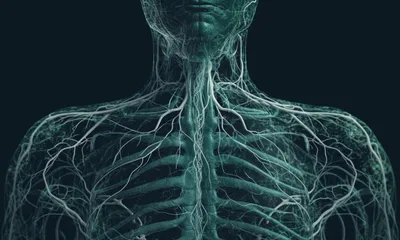
Modern neuroscience offers an interesting parallel. Research on interoception — the brain’s perception of the body’s internal state — suggests that the spinal cord and the enteric nervous system (the “gut brain”) function as something far more than passive conductors of motor commands. They are active processors of felt experience. The vagus nerve, traveling from the brainstem down through the thorax and abdomen, is now understood to be the primary highway of the mind-body connection. Regulate the spine; regulate the nervous system. Regulate the nervous system; regulate the mind. The ancients mapped this in symbolic language. The laboratory is now beginning to confirm it.
Posture as Prayer: The Consciousness-Spine Relationship
The relationship between posture and inner state runs in both directions — and this bidirectionality is crucial. We collapse our posture when we are defeated, and we feel more defeated because we have collapsed. We lengthen and open when we feel expansive, and we feel more expansive because we have lengthened and opened. The body is not downstream of the mind. They are one continuous system, and the spine is the organizing axis of that system.
Amy Cuddy’s research on “power posing” sparked controversy but pointed at something real: postural expansion shifts hormonal and neurological baselines. More interesting, from a contemplative standpoint, is the work on upright seated posture and attentional quality. Multiple studies across contemplative neuroscience suggest that meditators who maintain spinal elongation — not rigidity, but alert ease — demonstrate different brainwave patterns than those who slump. The physical form of meditation is not merely convention. It is technology.
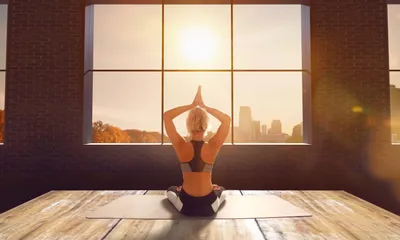
The Zen tradition encodes this understanding in the posture of zazen: spine stacked, chin slightly tucked, crown of the head floating upward as if suspended by a silk thread. This is not about performance. It is about creating the physical conditions in which stillness can deepen. The same wisdom appears in Egyptian ceremonial depictions, where pharaohs and priests are invariably shown with the spine vertical and the gaze level — not because the artists lacked imagination, but because that posture was understood to be a prerequisite for certain states.
Practical Work: Exercises for Spinal Alignment and Energetic Awareness
The following practices can be approached as purely physical exercises or as doorways into the deeper territory described above. Meet them where you are.
1. The Mountain Breath (Foundational Alignment) Stand with feet hip-width apart. Close your eyes. Feel the four corners of each foot pressing into the earth. Without forcing, allow the crown of the head to float upward — as if a gentle hand were lifting you from above. Feel the natural curves of the spine: the lumbar curve at the low back, the slight concavity behind the heart, the cervical curve at the neck. Take five slow, full breaths, imagining the inhale traveling up the length of the spine and the exhale descending. This is the beginning of meeting the axis within your own body.
2. Spinal Wave Mobilization Come onto hands and knees. On the inhale, allow the belly to soften downward and the gaze to lift (Cat-Cow’s “Cow” position). On the exhale, press the floor away, round the back, and let the head drop. Rather than doing this mechanically, allow it to become a continuous, undulating wave — moving sequentially through each segment of the spine. Practice for 2–3 minutes, following the breath. This exercise decompresses intervertebral discs, mobilizes spinal facet joints, and — from an energetic perspective — begins to awaken the sushumna by creating movement and circulation in the central channel.
3. Supported Fish Pose (Anahata Opening) Roll a blanket or bolster and place it horizontally across the mid-back, at the level of the shoulder blades. Lie back over it, allowing the chest to open and the arms to spread. Stay for 3–5 minutes. This counteracts the chronic flexion posture of modern life, opens the anahata (heart) chakra, and creates traction on the thoracic spine — often the most rigid and neglected segment. Breathe into the fullness of the chest. Notice what emotions or sensations arise. Receive them without narrative.
4. Spinal Breath Awareness (Pranayama) Sit in a comfortable upright position. Without forcing anything, begin to observe the natural breath. After several minutes, on the inhale, imagine a current of energy (light, warmth, awareness — whatever resonates) rising from the base of the spine to the crown. On the exhale, allow it to descend. You are not forcing kundalini — you are simply attending, cultivating sensitivity, and preparing the channel. This practice can be done for 10–20 minutes daily and is one of the safest and most foundational forms of subtle body work available to any practitioner regardless of experience level.
5. Walking Meditation as Axis Practice Walk slowly, feeling the earth beneath each foot. Keep the spine long and the gaze soft. With each step, feel yourself as the vertical axis between the ground below and the sky above — rooted downward, open upward, fully present in the middle. This is the simplest expression of the Axis Mundi made practice: not a concept, but a lived orientation.
A Word on Safety and Discernment
If you are drawn to kundalini practices beyond what is described above — intensive breathwork, prolonged meditation retreats, advanced pranayama, or working with a specific kundalini yoga lineage — please approach with appropriate care. Inform yourself about the signs of overwhelm (dysregulation, depersonalization, unusual physical symptoms that persist). Prioritize nervous system health: adequate sleep, grounded nutrition, supportive relationships, time in nature. Seek teachers who emphasize integration as much as activation.
The spine can hold immense energy. The practices that work with it wisely are those that honor both its power and its fragility, its cosmological grandeur and its very ordinary need for adequate rest, hydration, and movement.
The axis of the world runs through you. Tend it accordingly.
Going further: Kundalini Yoga: Awaken the Chakras and Purify Consciousness on Udemy practises the ascent this article describes, chakra by chakra. Affiliate link — Born To Be Free earns a commission if you enrol, at no extra cost to you.