In the labyrinthine corridors of Renaissance thought, few figures shine as brilliantly—and tragically—as Giordano Bruno. Burned at the stake in 1600 for heresy, this Dominican friar, philosopher, and memory master left behind a profound legacy that merged mysticism, cosmology, and cognitive technology. At the heart of his work lies an elaborate system of memory techniques that he called not merely mnemonic devices, but cognitive magic—a transformative practice that promised to reshape the mind itself.
The Philosophy Behind Bruno’s Memory Art
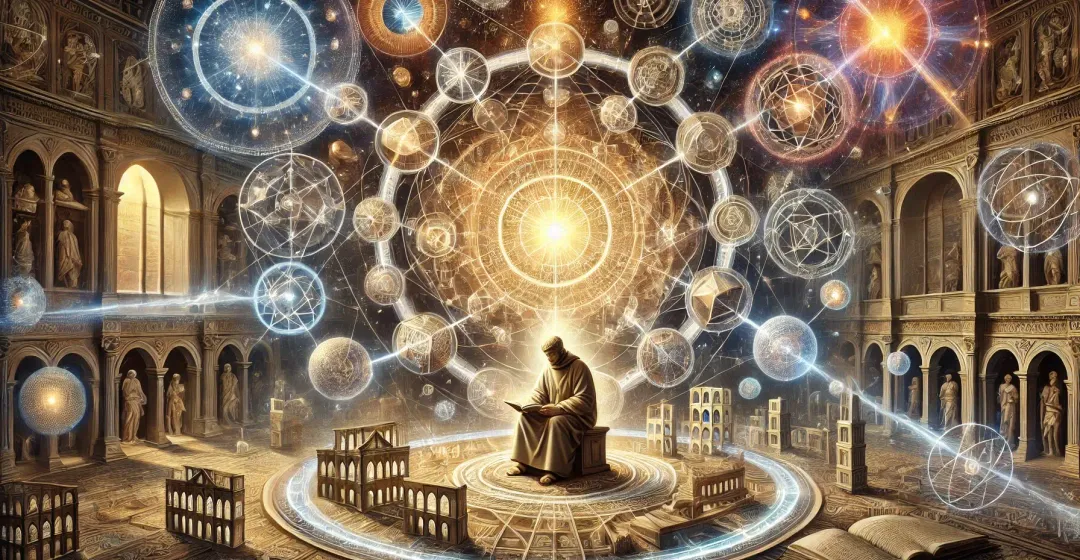
Bruno didn’t view memory techniques as simple tricks for recalling grocery lists. For him, the art of memory was a sacred technology for organizing knowledge, accessing divine truths, and literally restructuring consciousness. He believed that by arranging images in specific patterns within imagined architectural spaces, practitioners could create a microcosm of the universe within their own minds.
This wasn’t memorization—it was mental architecture, a way of building vast palaces of knowledge that mirrored the cosmic order itself.
The Core Techniques
1. The Memory Palace (Method of Loci)
The foundation of Bruno’s system rests on the ancient technique of the memory palace, but he elevated it to unprecedented complexity.
The Basic Principle: You create a vivid mental structure—a palace, cathedral, or entire city—and populate it with striking images that represent information you want to remember. By mentally walking through this space, you can retrieve the information in sequence.
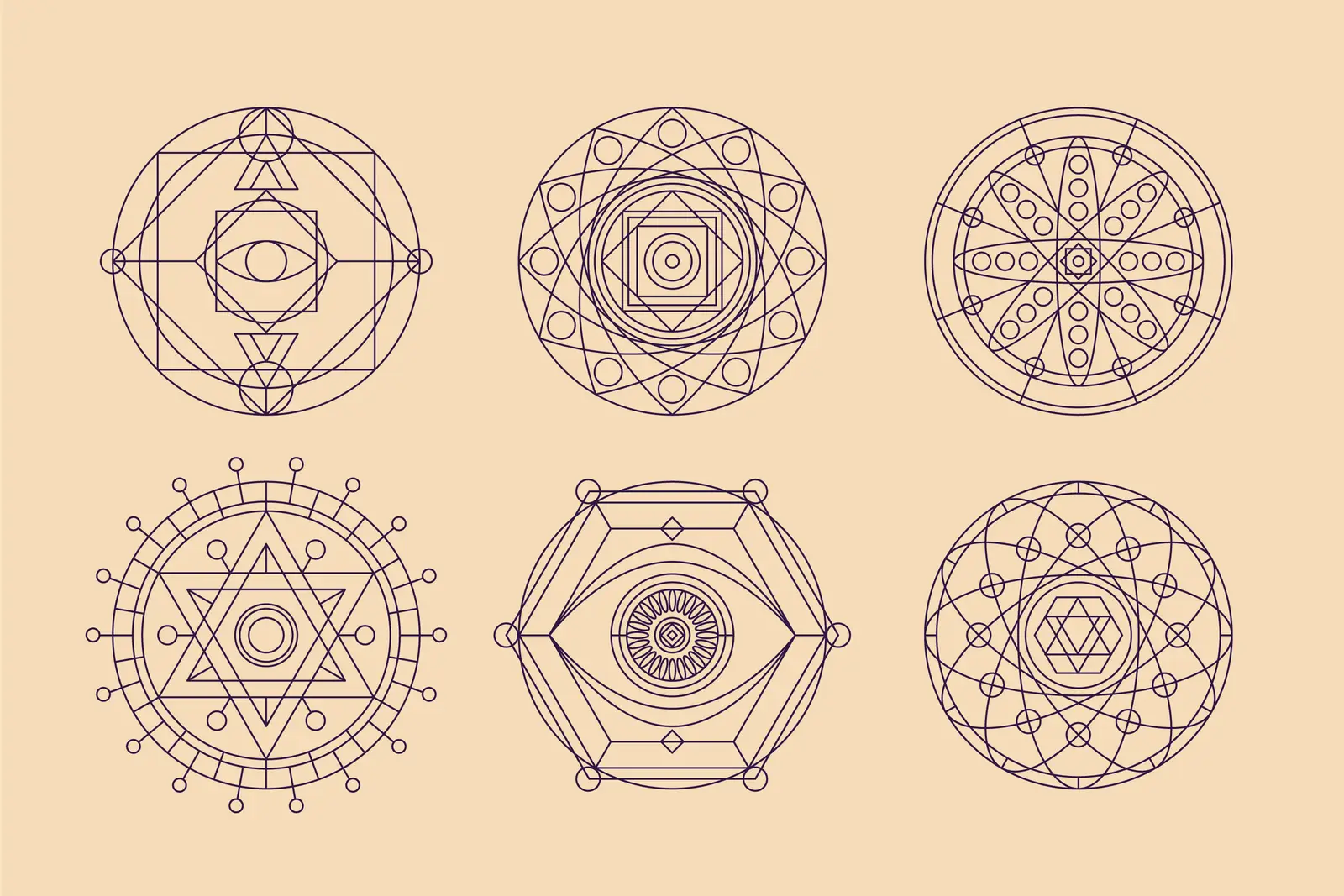
Bruno’s Innovation: While classical practitioners used familiar buildings, Bruno designed elaborate imaginary structures based on symbolic and mystical principles. He created memory wheels, concentric circles, and geometric patterns that encoded philosophical and cosmological systems.
2. The Thirty Seals (Sigilli)
Bruno’s most systematic work, De Umbris Idearum (On the Shadows of Ideas), presents thirty “seals” or methods for imprinting knowledge on memory. Here are some key seals:
The Seal of Seals: This meta-technique involves creating a master image or symbol that contains within it references to all other knowledge. Think of it as a mental index or operating system for your mind.
The Seal of the Chain: Information is linked together in causal or logical sequences, with each image triggering the next through dramatic narrative connections.
The Seal of the Statue: Bruno instructs practitioners to visualize knowledge as three-dimensional sculptures that can be examined from multiple angles, each perspective revealing different aspects of the concept.
3. The Magical Alphabet and Symbolic Images
Bruno developed elaborate systems of symbolic images drawn from:
- Astrological symbols
- Mythological figures
- Alchemical emblems
- Religious iconography
- Geometric forms
Each symbol carried multiple layers of meaning and could be combined like a visual language to represent complex philosophical ideas.
4. The Memory Wheels
Perhaps Bruno’s most distinctive innovation was his system of rotating memory wheels—concentric circles containing images, letters, or concepts that could be mentally rotated to create new combinations.
How They Work: Imagine several transparent discs, each divided into sections containing images or concepts. By rotating these wheels relative to one another, you generate new combinations that spark insights and reveal hidden connections between ideas.
A Practical Guide to Bruno’s Memory Methods
Stage 1: Building Your First Memory Palace
Day 1-3: Choose Your Structure Start simple. Select a building you know intimately—your childhood home, your current residence, or your workplace. Walk through it mentally, noting every room and feature.
Day 4-7: Create Your Route Establish a specific path through your space. Always enter through the same door, move through rooms in the same order. Consistency is crucial.
Day 8-14: Populate with Images Begin with something practical—perhaps a speech you need to give or a list of concepts you’re studying. For each point, create a vivid, exaggerated image and place it at a specific location in your palace.
Bruno’s Principle: Make images striking, unusual, emotionally charged, or absurd. A mundane image is easily forgotten; a shocking one burns into memory.
Example: To remember “photosynthesis,” don’t imagine a textbook definition. Instead, picture a massive plant with arms reaching toward the sun, literally eating golden light rays while exhaling visible green oxygen bubbles that spell out “ENERGY.”
Stage 2: Mastering the Symbolic Language
Week 3: Build Your Personal Symbol Library Create 20-30 master images that will represent common concepts in your field of study or interest. Bruno used mythological figures, but you can use anything meaningful to you.
Examples:
- Einstein = Physics/Relativity
- A lion = Courage/Leadership
- A tree = Growth/Connection
- A key = Solution/Access
Week 4: Practice Combination Start combining symbols to represent more complex ideas:
- Einstein standing under a tree = Growth of scientific knowledge
- A lion holding a key = Courageous solution
Week 5-6: Layer Your Meanings This is where Bruno’s system becomes magical. Each symbol should carry multiple meanings that you can access based on context. A tree might represent:
- Growth (primary meaning)
- Family connections (roots and branches)
- Life cycle (seasons)
- Knowledge (tree of knowledge)
Stage 3: The Memory Wheel Technique
Creating Your First Wheel:
- Draw three concentric circles on paper (you’ll eventually do this mentally)
- Outer wheel (12 sections): Place zodiac signs or the months of the year
- Middle wheel (10 sections): Place the numbers 0-9 or ten core concepts from your field
- Inner wheel (7 sections): Place the days of the week or seven master images
Using the Wheel:
To encode information, note which combination of sections aligns:
- To remember “The theory was proposed on Tuesday in March by researcher #7”
- Find where Tuesday (inner), March (outer), and 7 (middle) align
- Create an image at that intersection point
Advanced Practice: Rotate the wheels mentally to explore new combinations and discover unexpected connections between ideas.
Stage 4: The Chain Technique
This method links information through narrative.
Exercise: Take ten unrelated words: Dragon, Pencil, Storm, Mirror, Crown, Book, River, Flame, Door, Star
Create a vivid story: “A massive DRAGON writes with a golden PENCIL, causing a violent STORM. Lightning strikes a giant MIRROR, shattering it into a CROWN of glass. The crown falls onto an ancient BOOK beside a RIVER. The river catches FLAME, and smoke forms a DOOR in the air. Stepping through the door, you touch a fallen STAR.”
Walk through this story three times, then wait an hour. You’ll find you can recall all ten items in sequence effortlessly.
Bruno’s Advanced Version: Make each link teach you something. The dragon’s pencil could represent “creative power,” the storm might be “sudden insight,” the mirror “self-reflection.” Now you’re not just remembering a list—you’re encoding a philosophical journey.
Stage 5: Integration and Daily Practice (Ongoing)
Morning Ritual (10 minutes):
- Mentally walk through your memory palace
- Review and strengthen key images
- Add one new encoded piece of information
Evening Ritual (10 minutes):
- Review what you learned that day
- Create images for the most important concepts
- Place them in your palace or encode them with your wheel
Weekly Review:
- Rotate your memory wheels to discover new combinations
- Expand your palace with new rooms
- Deepen your symbol library
Advanced Techniques: Bruno’s “Cognitive Magic”
The Shadow Technique
Bruno spoke of working with “shadows of ideas”—not the full light of direct knowledge, but the traces and reflections that lead to understanding.
Practice: When memorizing complex philosophy or abstract concepts, don’t try to capture the whole idea at once. Instead, create multiple images that each capture one “shadow” or aspect:
- For “democracy”: a circle of equal-sized chairs, a scale in balance, diverse hands touching a shared sphere
- Store each shadow in a different location
- Understanding emerges from contemplating all shadows together
The Contemplative Rotation
Once you’ve built complex systems in your memory, Bruno advocated spending time simply contemplating them—mentally walking through palaces, rotating wheels, examining statues from new angles.
This passive review:
- Strengthens neural pathways
- Reveals unexpected connections
- Transforms memorization into meditation
- Generates original insights
Practical Applications Today
For Students:
- Build subject-specific palaces (one for history, one for chemistry)
- Use memory wheels for language learning (conjugations, vocabulary sets)
- Create symbol libraries for mathematical concepts
For Professionals:
- Encode presentation talking points in a memory palace
- Remember names and key information about clients/colleagues
- Organize project management information spatially
For Personal Development:
- Create a “wisdom palace” filled with quotes, principles, and insights
- Build memory wheels for goal tracking and life planning
- Use the chain technique for habit formation sequences
Common Challenges and Solutions
Challenge: “My images aren’t vivid enough.” Solution: Engage all senses. Don’t just see the dragon—hear its roar, smell sulfur, feel the heat, taste ash in the air. Bruno emphasized multisensory encoding.
Challenge: “I forget where I placed things in my palace.” Solution: Keep your initial structures small and simple. Master a five-room house before building a cathedral.
Challenge: “This feels silly or childish.” Solution: This is your ego resisting. Bruno’s techniques have survived 400+ years because they work with how human memory actually functions. Embrace the strangeness.
Challenge: “I don’t have time for elaborate practice.” Solution: Start with 5 minutes daily. Even small consistent practice yields remarkable results.
The Deeper Purpose
Bruno didn’t develop these techniques merely for practical memory improvement. He believed that by organizing knowledge according to cosmic principles, practitioners could achieve a kind of cognitive transformation—accessing higher forms of understanding and literally reshaping their consciousness to mirror divine intelligence.
While we might not share his mystical cosmology, there’s profound truth in his core insight: how we organize information shapes how we think. By building elaborate mental structures, we’re not just memorizing—we’re creating new ways of seeing connections, generating insights, and understanding complexity.
Your Journey Begins
Start tonight. Choose one room in your home. Place three vivid images in it representing three things you want to remember tomorrow. Walk through that room mentally before sleep.
That’s all. You’ve begun.
Over weeks and months, your practice will deepen. Your palaces will grow. Your symbolic language will become richer. You’ll find yourself thinking differently—seeing connections others miss, retrieving information effortlessly, and experiencing the strange magic Bruno promised: a mind transformed into a cosmos.
The Renaissance magus was right about one thing: memory is not passive storage. It’s active architecture. And you are the architect.
Going further: Mystery Teachings with Sarah Elkhaldy on Gaia sits in the same hermetic tradition Bruno drew his system from.
Or, as a course: The Memory Palace Course on Udemy teaches the Method of Loci as a skill — the same architecture Bruno built his system on. Affiliate link — Born To Be Free earns a commission if you subscribe or enrol, at no extra cost to you.